Softinsa Badge Platform.
Making learning visible. Digital badges, verified skills and meaningful progression.
The challenge
Employees completed external training, but evidence remained scattered across folders, emails and PDFs. There was no standardised way to document, approve and share skills, no auditable approval flow and no consolidated view of team learning progress.
A real stakeholder in an academic project
Built within the PINT course in 2025/26, the project involved Softinsa as a real stakeholder defining requirements and reviewing deliveries. The team had five members. As Team Leader and Web Specialist, I coordinated priorities, communication and integration across the applications.
The solution: visible learning progression
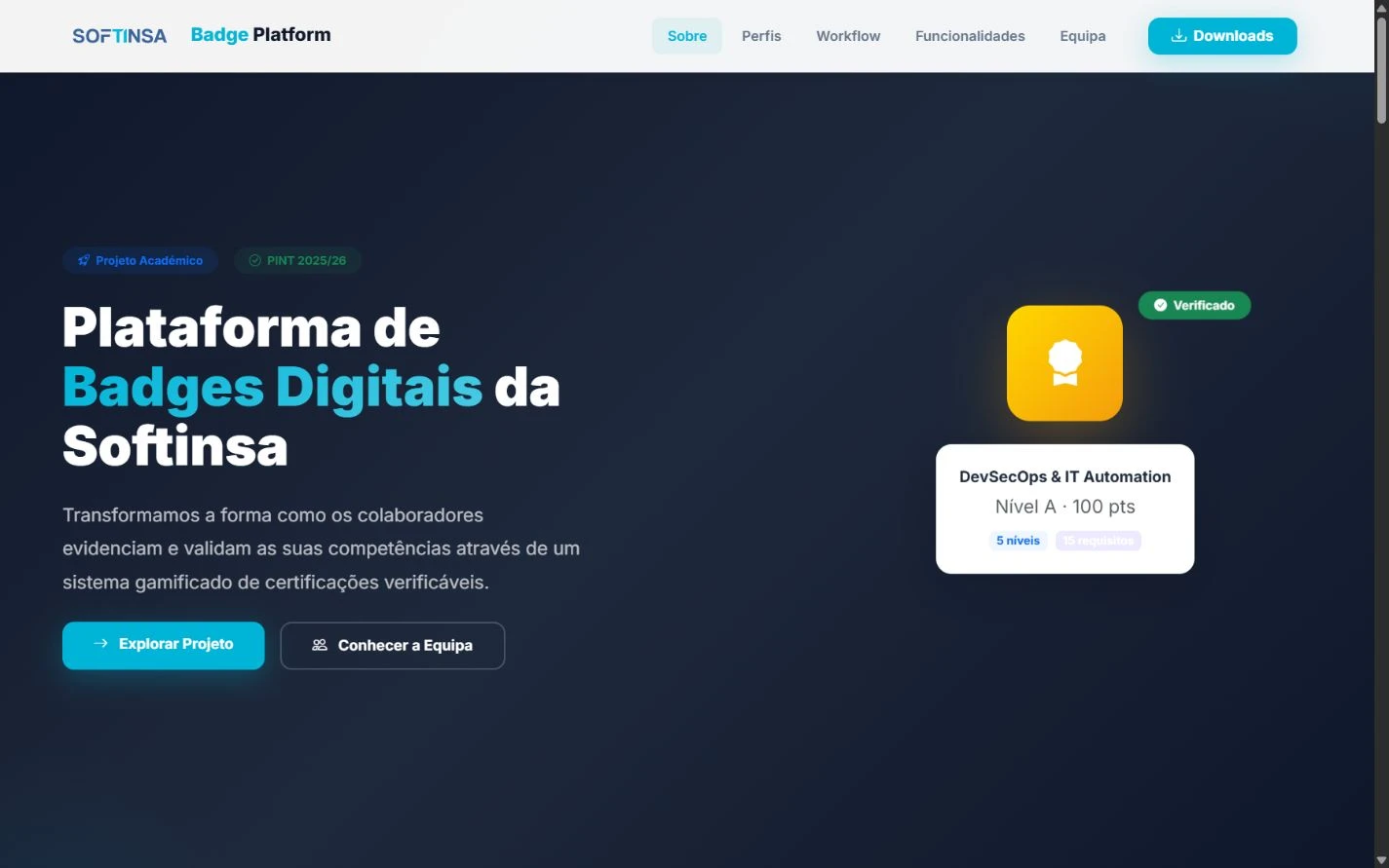
The web platform supports Administrators, Consultants, Talent Managers and Service Line Leaders. Applications move from submission through TM review to an SLL decision. Badges are organised into Learning Paths, Service Lines, areas and levels A–E. Points and rankings support progression. The Flutter application lets consultants track learning and submit evidence.
My contribution
I led architecture planning and task allocation. I developed the web pages for all four roles, dashboards, catalogue, management tools and application workflow. I implemented recommendation scoring, public verification pages, sharing components and email signatures. I coordinated REST contracts, code reviews, integration testing and stakeholder demonstrations.
Architecture and collaboration
React and Material UI power the web application; Flutter powers mobile. A shared Node.js and Express API uses Sequelize and PostgreSQL. JWT supports access control, WebSockets supports synchronisation and Nodemailer handles transactional emails. I worked with Anacleto Silva (mobile), Pedro Rocha (backend), Guilherme Figueira (mobile support) and Bruno Costa (web support). Mobile delivery was a team achievement, not my individual implementation.
Outcomes and limitations
The team delivered a functional web platform, API, Android test APK and technical documentation. The approval workflow and features including PDF evidence, recommendations and sharing were validated with the stakeholder. The catalogue includes 17 badges, three Service Lines, four areas and five levels. Coverage above 90% is a team-reported checklist estimate, not an independent audit. No internal adoption metrics are claimed.
Product and leadership learning
Turning requirements into weekly tasks meant managing dependencies between web, backend and mobile. The project reinforced the value of clear API contracts, incremental delivery and communication across specialities. Academic assessment was positive, with feedback highlighting quality and alignment with requirements.