RepairSync.
From check-in to handover. One platform to connect an entire workshop operation.
The challenge
Workshop operations are often scattered across spreadsheets, manual records and separate tools. Customer data, repairs, inventory, appointments and communication become difficult to coordinate. RepairSync addresses this fragmentation for automotive, electronics, bicycle and appliance workshops.
From academic idea to product
The idea started in an academic setting. I rebuilt and expanded it independently with the aim of creating a commercially viable SaaS. I owned requirements analysis, interface design, architecture, implementation and testing, prioritising the complete repair journey over isolated features.
One operation, different responsibilities
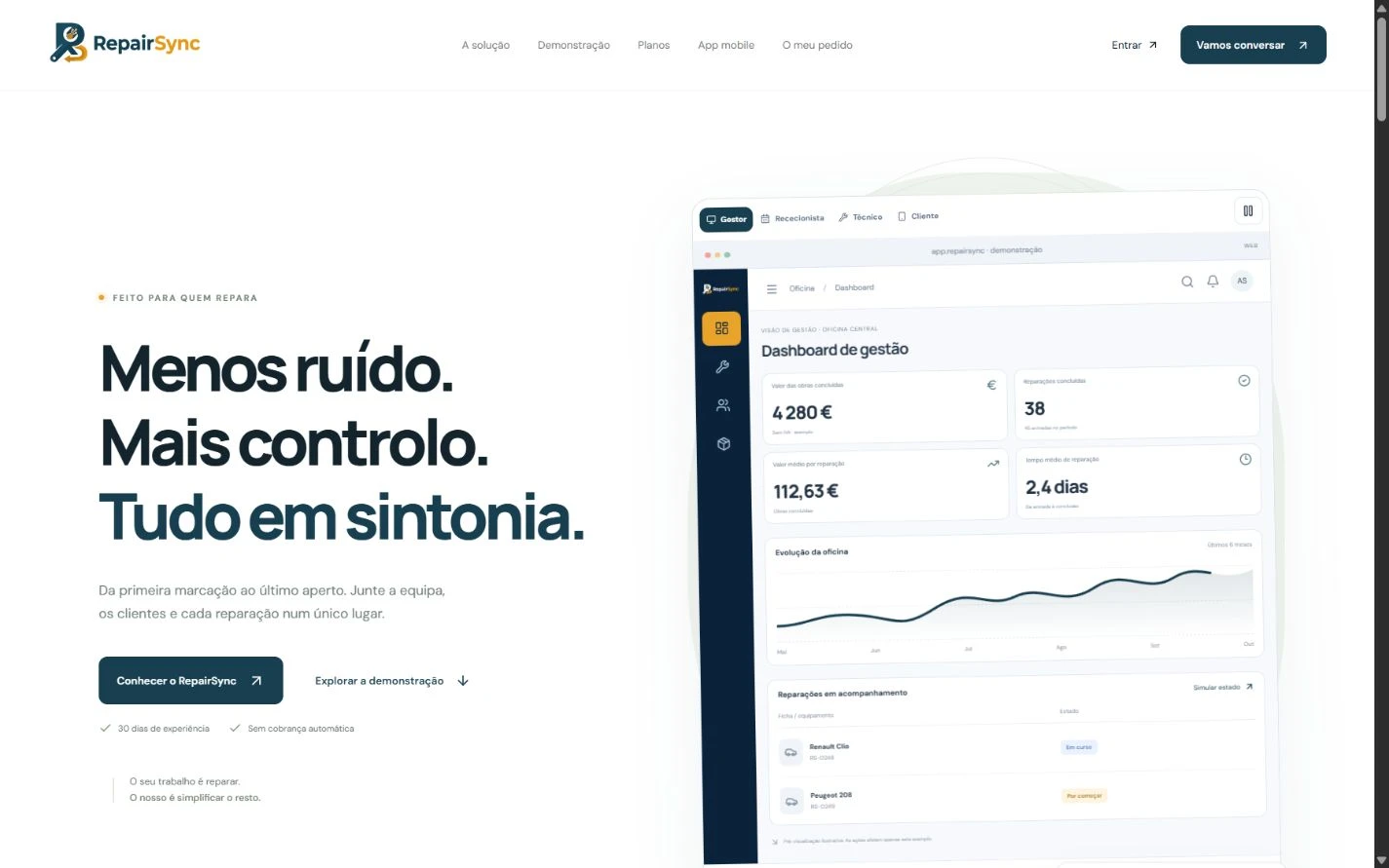
A web management application supports daily operations while a React Native app supports technicians. Managers, receptionists, technicians and customers have distinct access. Repairs, quotations, inventory, scheduling, reporting and subscriptions share one platform, with real-time communication and notifications.
Architecture and technical choices
React and React Native connect to a Node.js and Express API backed by PostgreSQL. The multi-workshop architecture separates data and permissions. JWT supports authentication and WebSockets enables real-time communication. Interfaces reflect each role’s working context.
Outcome and next step
The first functional release is complete, with core workflows implemented and tested, including repair check-in through to customer handover. It is being prepared for real-world use. There are no paying users or commercial metrics yet; operational validation is the next step.
What this project demonstrates
Independent end-to-end product development, with technical decisions connected to operational needs. It strengthened my work across frontend, FullStack architecture, UX/UI and product management.