From idea to first SaaS: start with the problem
Using RepairSync to explore workflows, priorities and the difference between a working product and market validation.
 Diogo Peres· 5 min
On this page
It is tempting to start a SaaS with the stack: choose a framework, design a dashboard and imagine the first subscription. RepairSync began with a more practical question: how can a workshop connect its processes without switching between spreadsheets and separate applications?
The problem before the features
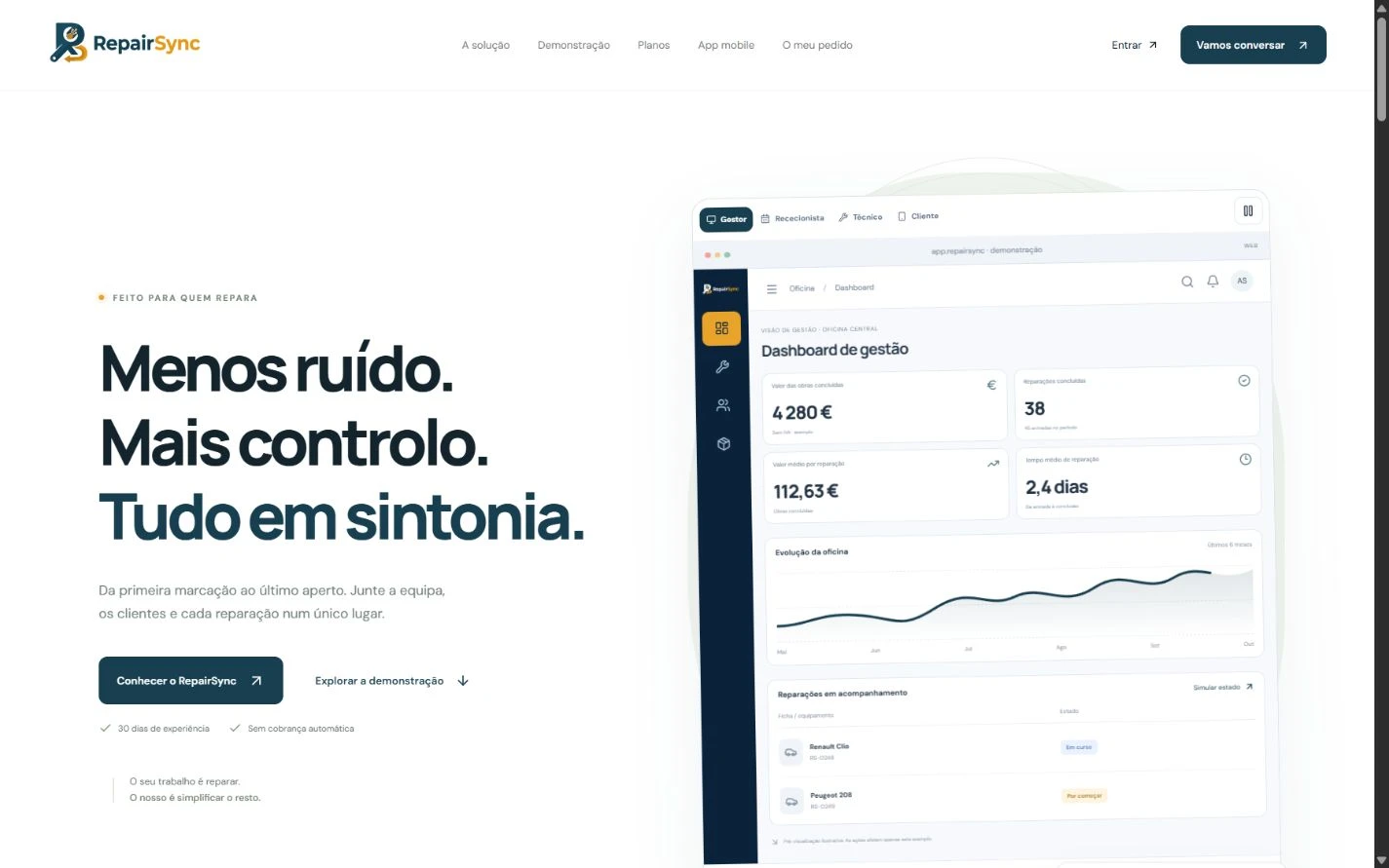
Customers, repairs, quotations, inventory and appointments belong to one operation. When information is fragmented, tracking a repair becomes harder. Connecting that journey became the starting point for the product.
Build a complete journey
A long feature list cannot replace a working end-to-end flow. For RepairSync, the core journey moves from repair check-in through the work itself to customer handover. Each role needs to understand what happens next.
Design around responsibilities
Managers, receptionists, technicians and customers need different information and permissions. The interface should reflect those responsibilities. The same principle applies to separating data between workshops.
Put the stack in service of the workflow
React and React Native support the web and mobile experiences. Node.js, Express and PostgreSQL power the API and data. WebSockets supports real-time communication. These choices help deliver the workflow; they do not replace understanding the problem.
A functional release is not market validation
The first functional release is complete and the main flows have been tested. There are no paying users or commercial outcomes to report yet. The next step is real-world use, observing friction and deciding what deserves priority.
The question I want to keep asking
Building this SaaS made me look beyond code. Before adding a feature, I want to explain which problem it solves, who it helps and how I will know whether it helped. That connection between development and product is what I want to keep exploring.
Have an idea or opportunity to share?
Let’s talk